Subclass 482 · Skills in Demand
Subclass 482 — Skills in Demand visa
Short answer: the Subclass 482 Skills in Demand visa lets an approved Australian sponsor employ an overseas worker for up to four years in a Core Skills occupation paid at least A$79,423 (CSIT, from 1 July 2026) — or any occupation paid at least A$146,576 (Specialist Skills) — with permanent residence via the 186 after two years with the sponsor. Home Affairs currently decides 50% of nominations within 5 days and 90% within 9 months; Core Skills visas 69 days / 10 months. Streams, occupation lists, costs, obligations and the PR pathway below.
By Keshab Chapagain, registered migration agent (MARN 1576536) since 2015 · WIDEN, Sydney · Reviewed August 2026
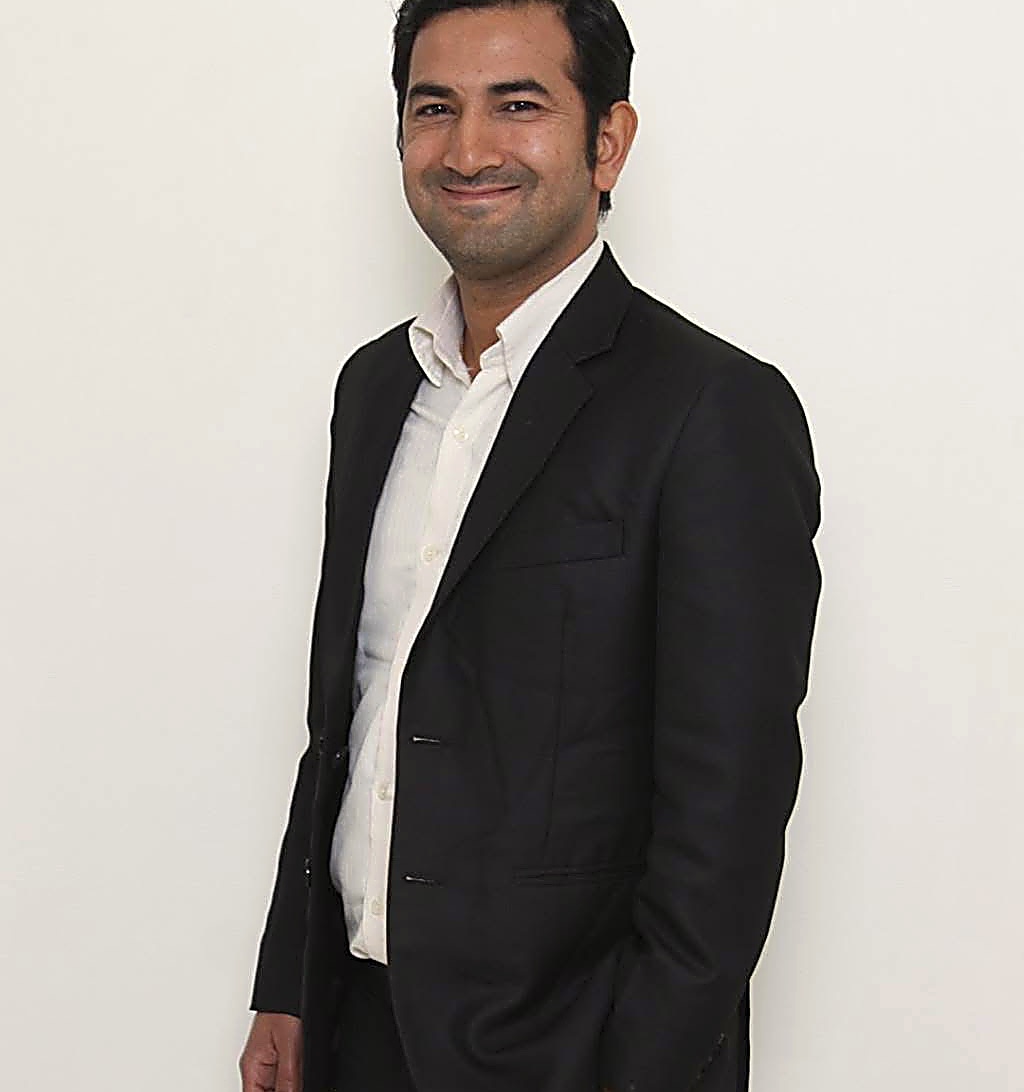 Keshab Chapagain · MARN 1576536 · Registered since 2015
 - CSIT 2026–27 (from 1 Jul 2026)
- $79,423
- CSIT 2025–26 (to 30 Jun 2026)
- $76,515
- SSIT (from 1 Jul 2026)
- $146,576
- Visa validity
- Up to 4 years
- SAF levy/yr (indexed)
- $1,200–$1,800
This page covers what the 482 is, the three streams, what the sponsor and the applicant each have to do, indicative costs, and how WIDEN supports the sponsorship, nomination, and visa stages. For the PR step at the end of the pathway, see the 186 Visa Permanent Residency Guide. If the arrangement is really about occupational training rather than filling a paid role, the right visa may be the 407 Training Visa instead.
MARN 1576536 · Verifiable at mara.gov.au
What the 482 visa is
The 482 Skills in Demand visa is a temporary visa, generally granted for up to 4 years (less in some streams). It allows the holder to work in Australia for the nominating sponsor in the nominated occupation, bring eligible family members, and travel in and out of Australia during validity. Subject to meeting the requirements of the relevant stream, most 482 holders can transition to permanent residence via the 186 ENS visa after the qualifying period of employment.
The 482 is a three-stage pathway, with each stage handled separately:
- Sponsorship — the Australian business applies to become a Standard Business Sponsor (SBS) if it does not already hold sponsorship.
- Nomination — the sponsor nominates the specific role and worker, supported by a Genuine Position Statement (GPS), Annual Market Salary Rate (AMSR) analysis, organisational documents, and Labour Market Testing evidence where required.
- Visa application — the worker applies for the visa, supported by skills, English, health and character evidence.
The three streams
Core Skills stream
For occupations on the Core Skills Occupation List (CSOL), paid at or above the Core Skills Income Threshold (CSIT) — AUD $79,423 for nomination applications lodged from 1 July 2026 (current and past thresholds; it was $76,515 to 30 June 2026). This is the most common stream and the typical pathway for trades and mid-skill professional roles. After the qualifying employment period the worker is usually eligible for 186 via the Temporary Residence Transition stream.
Specialist Skills stream
For higher-paid roles above the Specialist Skills Income Threshold (SSIT) — AUD $141,210 to 30 June 2026, rising to $146,576 from 1 July 2026. The Specialist Skills stream has no occupation list — eligibility is income-based — and generally offers faster (priority) processing. It excludes trades workers, machinery operators/drivers, and labourers (ANZSCO major groups 3, 7 and 8).
Labour Agreement stream
For roles filled under a labour agreement or Designated Area Migration Agreement (DAMA) — typically covering occupations or concessions not available in the Core Skills stream. Requirements (salary, skills, English concessions) are set by the specific agreement. (Note: there is no "Essential Skills" stream — it was proposed under the 2023 Migration Strategy but never legislated; the Labour Agreement stream carried over from the TSS visa.)
| Feature | Core Skills | Specialist Skills | Labour Agreement |
|---|---|---|---|
| Occupation list | CSOL (~456 occupations) | None (income-based) | Set by the agreement |
| Salary floor 2026–27 (from 1 Jul 2026) | CSIT $79,423 | SSIT $146,576 | Per agreement |
| Salary floor 2025–26 (to 30 Jun 2026) | $76,515 | $141,210 | Per agreement |
| Visa validity | Up to 4 years | Up to 4 years | Up to 4 years |
| PR pathway (186 TRT) | Yes | Yes | Yes (most) |
Income thresholds index annually on 1 July. Hong Kong passport holders may be granted up to 5 years. Verify current figures with the Department of Home Affairs before lodging.
What changed: TSS → Skills in Demand (Dec 2024)
The Skills in Demand visa launched on 7 December 2024, replacing the Temporary Skill Shortage (TSS) visa while keeping the 482 subclass number. If you previously dealt with a 457 or TSS visa, the key changes are:
- Three streams (Specialist Skills, Core Skills, Labour Agreement) replaced the old Short-term / Medium-term / Labour Agreement split.
- One occupation list — the CSOL (~456 occupations) replaced the MLTSSL and STSOL for the Core Skills stream; the Specialist Skills stream has no list.
- Work experience cut to 1 year (from 2), measured over the last 5 years.
- PR faster: the 186 Temporary Residence Transition period dropped to 2 years (from 3), and time with any approved sponsor counts. From 29 November 2025, that employment only counts where the employer was an approved sponsor at the time.
- TSMIT renamed CSIT and thresholds now index every 1 July.
- More mobility: if you stop working for your sponsor you have up to 180 consecutive days (max 365 cumulatively) to find a new sponsor or depart, and you can work for other employers in the meantime (visa condition 8607). Sponsors must still notify the Department of cessation within 28 days.
- English tightened to IELTS 5.0 in each component (from 13 September 2025).
Sponsorship — what the business has to do
If the business does not already hold a Standard Business Sponsorship approval, the first step is to apply. The sponsor application looks at the business's lawful operation, financial position, training contribution, and absence of adverse information. Approval lasts 5 years and allows the business to lodge nominations during that period.
For an in-depth walkthrough of the sponsorship application, see How to Become an Approved Sponsor in Australia.
Nomination — the heart of the file
Nomination is where most 482 applications succeed or fail. The sponsor must demonstrate that the role is a genuine, ongoing position, that the worker will be paid at or above the relevant income threshold and at the market salary rate for the role, and that Labour Market Testing has been conducted where required.
Key documents typically include:
- Genuine Position Statement (GPS) — position justification, business need, organisational structure
- Annual Market Salary Rate (AMSR) analysis — benchmarking by occupation, region, and ANZSCO
- Labour Market Testing evidence (advertisements, candidate evaluations) where required
- Employment contract aligned to the nominated occupation
- Sponsor financials and organisational chart
If you are a migration agent looking for documents-only nomination support — including GPS drafting, AMSR reports, and full nomination packs — see For Migration Agents.
Visa application — the worker's side
The applicant lodges the visa application after the nomination is lodged (sponsorship and nomination can sometimes be lodged together with the visa). Typical evidence requirements include:
- Skills evidence — qualifications, work experience, and a skills assessment where required for the occupation. Experienced but without a formal qualification? Recognition of Prior Learning (RPL) can produce a nationally recognised qualification to support the skills assessment.
- English language — competent English (IELTS 5.0 each band or equivalent, with some occupations requiring higher)
- Health and character — medical, police clearances from every country lived in for 12 months or more in the last 10 years
- Identity, relationship, and family documents
482 visa cost 2026
Total 482 cost varies materially by stream and family composition. The cost decomposes into three layers:
- Government charges (Department of Home Affairs). Sponsorship application charge; nomination charge; visa application charge (varies by stream and family size); biometric and health-examination charges.
- SAF levy (Skilling Australians Fund, paid by the sponsor up-front). $1,200 per year of nomination for small business or $1,800 per year for other businesses.
- Professional fees (migration agent). Fixed-fee, set in writing under section 42 of the Migration (Migration Agents Code of Conduct) Regulations 2021 before work begins.
Typical total employer + applicant cost ranges from approximately $7,000 to $15,000 plus professional fees, but the actual number depends on the stream, family size and the current Department charges at the date of application. Verify current government figures at immi.homeaffairs.gov.au before any business decision.
482 visa processing time — how long does it take?
There are three sequential decisions in a 482 file and the total processing time is the sum of all three: sponsorship decision (for new sponsors), nomination decision, and visa decision. The Department publishes indicative processing times per stream at the link above and updates them regularly; current published bands shift considerably depending on volume and stream priority. For a 482 lodged through a complete file, end-to-end times in 2026 typically fall in the range of 1–6 months for the visa stage, with sponsorship and nomination adding more time at the front. The Department's "global priorities" framework may compress timelines for higher-priority occupations and sectors — confirm the current settings before committing to a relocation timeline.
482 visa requirements
The requirements operate at three layers — the sponsor, the position, and the worker — and each is decided separately:
- Sponsor requirements. Approved Standard Business Sponsor (SBS) — lawfully operating Australian business, no adverse information, sponsor obligations history clean. Sponsorship is valid for five years.
- Position requirements. Genuine ongoing role; occupation on the relevant list for the stream; salary at or above the CSIT (Core Skills) or SSIT (Specialist Skills); terms and conditions equivalent to an Australian worker doing the same role; labour market testing where required.
- Worker requirements. Skills sufficient to perform the role (often with a formal skills assessment); 1 year of relevant work experience at the required skill level, full-time or equivalent, within the last 5 years (reduced from 2 years under Skills in Demand); competent English (IELTS 5.0 in each component, tightened from 13 September 2025); health and character requirements; valid passport.
482 visa from India / UK / common origin countries
The 482 framework is country-neutral in eligibility terms — the same sponsor / position / worker rules apply regardless of nationality. Country of origin affects two operational areas: (1) the English language exemption (UK, US, Canada, NZ and Ireland passport-holders are generally exempt from the formal English test); and (2) the skills assessment requirement for trade occupations, where Trades Recognition Australia operates a country-specific list and the Job Ready Program pathway. For 482 applicants from India, the most common stuck-point is the skills assessment / English combination; for UK applicants, it is usually salary positioning rather than English or skills.
Is there an age limit on the 482 visa?
No — the Subclass 482 itself has no upper age limit. However, the Subclass 186 (the permanent-residency follow-on most 482 holders use) generally requires the applicant to be under 45 for the Temporary Residence Transition and Direct Entry streams, with limited exceptions. The age criterion is tested when the visa application is made, not when the nomination is lodged — the two are usually close together, so it only matters for applicants near the limit. If permanent residency through the 186 is the goal, the 45-year age cap is the binding constraint, not the 482 itself.
Common scenarios we work with
Australian business sponsoring an overseas worker
End-to-end engagement: SBS application (if not already held), nomination including GPS and AMSR, visa application. Suited to businesses that want the full pathway managed under one MARA agent.
Transition from 482 to 186 (PR)
For workers who have been in the nominated occupation for 2 years with an approved sponsor, the next step is 186 via the Temporary Residence Transition stream. See the dedicated 482 → 186 PR pathway page, or the full 186 Visa Guide for the PR stage.
Migration agents needing documents-only support
Fellow registered migration agents commonly engage WIDEN for documents-only B2B work — GPS drafting, AMSR reports, nomination preparation, or file review before lodgement. See For Migration Agents for service scopes, fixed fees, and turnaround commitments.
Indicative fees and timelines
Each 482 file has three layers of fee: government charges (paid to the Department), levy (SAF, paid by the sponsor), and professional fees. Indicative government figures include sponsorship application $420, nomination fee variable by stream, visa application charge variable by stream and family composition, and SAF levy $1,200/year (small business) or $1,800/year (other). All figures are subject to change — confirm current figures on the Department of Home Affairs website before planning.
Professional fees are set on a fixed-fee basis under section 46 of the Migration (Migration Agents Code of Conduct) Regulations 2021 and are confirmed in writing in a service agreement before work commences.
Discuss your 482 pathway
Book an initial consultation
The 482 file involves multiple parties (employer, worker, occupation, salary, and sometimes an existing migration agent). A 30-minute consultation will clarify your stream, identify the documents required, and outline the steps and costs.
Consultation fee: $220 inc. GST. Tax invoice with MARN issued. The OMARA Consumer Guide is provided to all clients before the consultation begins.
Book Consultation →Related 482 guides
- 482 Core Skills Occupation List (CSOL) — is your occupation on the 482 list?
- 482 Specialist Skills stream — the no-occupation-list, high-income, priority pathway
- 482 → 186 PR pathway — how to get permanent residency from a 482
- 482 Sponsorship Step-by-Step — the full process for employers
- 482 Nomination Documents & LMT — GPS, salary analysis, contract, labour market testing
- 482 Nomination Refusal — ART Review — if a nomination is refused
- Sponsor a Worker in Australia — full SBS + 482 + 186 service
- Sponsorship Cost Calculator — estimate the total 482 cost
- Labour Market Testing guide — advertising rules for the nomination
- 186 Visa Permanent Residency Guide — the PR step after 482
- How to Become an Approved Sponsor — the SBS application in detail
- How to Find Employer Sponsorship — for workers searching for a sponsor
- For Migration Agents — documents-only B2B (GPS, AMSR, nomination-only)
- 407 Training Visa — an alternative temporary sponsored pathway
This page contains general information only and does not constitute migration advice. Migration advice is provided by Keshab Chapagain (MARN 1576536) only after a paid consultation under section 43 of the Migration (Migration Agents Code of Conduct) Regulations 2021, with a written service agreement issued before further work commences. The OMARA Consumer Guide is provided to all clients before the consultation begins. Government fees and policy settings are subject to change — verify all figures with the Department of Home Affairs before making decisions.
Exploring a 482 / employer-sponsored visa?
Tell us your situation and get an honest initial read.
Ready now? Skip the form. Pick a time and talk to Keshab directly — your documents on the table, a straight answer, and a written summary afterwards. $220 inc. GST, credited toward your fee if you engage.
Pick a time — no enquiry needed →Live 482-pathway jobs right now
Real employers on SponsorTalent, our sponsorship jobs marketplace — applying is free and goes straight to the employer.
Questions we get asked first
What is the 482 Skills in Demand visa?
The Subclass 482 Skills in Demand (SID) visa is the main temporary employer-sponsored work visa for Australia. It launched on 7 December 2024, replacing the Temporary Skill Shortage (TSS) visa (which had itself replaced the legacy 457). It keeps the 482 subclass number. The visa permits stays of up to 4 years (5 for Hong Kong passport holders) and, in most cases, is the first step toward permanent residence via the Subclass 186 Employer Nomination Scheme.
What are the streams of the 482 visa?
The 482 has three streams. The Core Skills stream is for occupations on the Core Skills Occupation List (CSOL) paid at or above the Core Skills Income Threshold (CSIT). The Specialist Skills stream is for higher-paid roles above the Specialist Skills Income Threshold (SSIT) and has no occupation list. The Labour Agreement stream covers roles filled under a labour agreement or Designated Area Migration Agreement (DAMA). There is no 'Essential Skills' stream — that was proposed under the Migration Strategy but never legislated.
How much work experience is required for the 482?
Under Skills in Demand the requirement is 1 year of relevant work experience at the required skill level, full-time or the part-time/casual equivalent, completed within the 5 years before the visa application. This was reduced from the previous 2-year rule when the visa launched on 7 December 2024.
What are the 482 income thresholds in 2026?
For nomination applications lodged from 1 July 2026 to 30 June 2027, the Core Skills Income Threshold (CSIT) is AUD $79,423 and the Specialist Skills Income Threshold (SSIT) is AUD $146,576 (Department of Home Affairs, published 1 July 2026). For lodgements up to 30 June 2026 they were AUD $76,515 and AUD $141,210. The TSMIT used for the 494 is also AUD $79,423. The nominated salary must meet the relevant threshold AND the annual market salary rate for the role. These figures index annually — verify the current numbers with the Department of Home Affairs before lodging.
How much does the 482 visa cost?
Government charges include the sponsorship application ($420), the nomination fee, the visa application charge (varies by stream and family size), and the Skilling Australians Fund (SAF) levy — $1,200 per nomination year for small business (turnover under $10m) or $1,800 per year for larger employers, paid up-front. Total employer + applicant cost typically ranges from $7,000 to $15,000 plus professional fees. Government figures are subject to change — verify with the Department of Home Affairs.
Can the 482 lead to permanent residency?
Yes. The most common pathway is 482 to 186 via the Temporary Residence Transition (TRT) stream, available after the worker has been employed in the nominated occupation for 2 years (reduced from 3) within the 3 years before nomination. Time with any approved sponsor counts. From 29 November 2025, that employment only counts where the employer was an approved work sponsor at the time. See the 482→186 PR pathway page for detail.
Who is responsible for what — sponsor, nominator, applicant?
The Australian business is the sponsor (Standard Business Sponsorship) and the nominator (nomination of a specific role). The overseas worker is the applicant. Each of the three stages — sponsorship, nomination, and visa application — has its own form, fee, and evidence requirements, and there are separate compliance obligations on the sponsor after grant.
Does the worker need a skills assessment for the 482?
A skills assessment is required for some occupations (notably trades-listed occupations from countries on the Department's skills-assessment list). For other occupations the requirement is met through demonstrated work experience. Always check the specific occupation requirements before applying.
Keep reading