Study in Australia · Genuine Student
Genuine Student Requirement Australia — 2026 Guide
Short answer: since 23 March 2024 the Genuine Student requirement replaced the GTE. Officers assess four things — your circumstances at home, the value of the course to your future, your immigration history, and anything else relevant — against the evidence and a written statement, not a template. Refusals cluster around unexplained course changes, weak ties to home and thin financial evidence. Below: how each area is weighed, what to write, and a free self-assessment.
By Keshab Chapagain, registered migration agent (MARN 1576536) since 2015 · WIDEN, Sydney · Reviewed August 2026
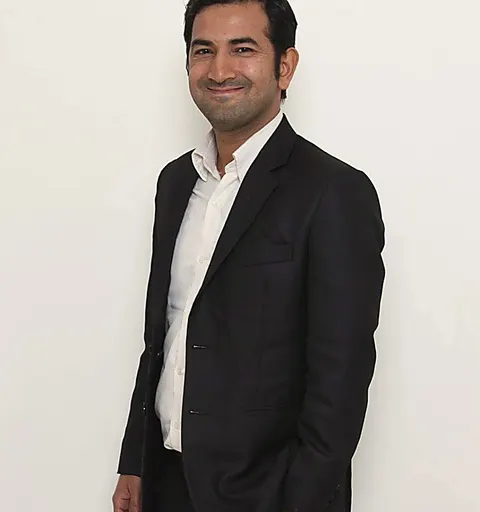 Keshab Chapagain · MARN 1576536 · Registered since 2015
 - Applies to
- Subclass 500
- In force since
- 23 March 2024
- Replaced
- GTE test
- Assessment areas
- 4
- Living cost (at last review)
- $29,710 / year
The migration agent that other migration agents learn from. WIDEN is an OMARA-approved CPD provider — our training is rated ★4.9 by 40+ registered migration agents.
About the CPD →MARN 1576536 · Verifiable at mara.gov.au
Free resource: Genuine Student Self-Assessment — questions organised by the four areas the Department considers, plus a 5-email educational series on financial evidence, course choice, and when professional help adds value. General information only.
What is the Genuine Student requirement?
The Genuine Student (GS) requirement is the test a delegate of the Department of Home Affairs applies when deciding a Subclass 500 student visa application. It replaced the Genuine Temporary Entrant (GTE) test on 23 March 2024 under the Migration Amendment (Genuine Student) Regulations 2024, and is set out in clause 500.212 of Schedule 2 to the Migration Regulations 1994.
The officer must be satisfied that, having regard to all the circumstances, the applicant genuinely intends to stay in Australia temporarily for the purpose of obtaining education. The shift from GTE to GS moves the focus from "are you going to leave?" toward "are you really here to study?" — which makes the credibility of the study choice and the applicant's evidence about it more important than ever.
The four areas an officer looks at
Public Departmental guidance lists the matters an officer must consider:
1. Your current circumstances in your home country
Officers look at your ties to your home country: employment, family, property, financial circumstances, and other commitments. The stronger the genuine ties, the more credible your intention to study and then potentially return. Limited ties are not fatal — but they need to be explained by reference to your study and career plan, not glossed over.
2. Your chosen course and its prospective value to your career
This is now the heart of the assessment. The officer is asking: does this course make sense for this applicant, given their prior study and work background, and where are they going with it afterward? A 28-year-old with a Master's degree applying for a Diploma in a different field needs a much stronger explanation than a 20-year-old continuing their existing field. The course choice must be defensible.
3. Your immigration history
Previous visa applications, refusals, cancellations, and travel history are reviewed. A prior refusal is a factor but is not fatal — provided it is disclosed honestly and addressed directly. Concealment of a refusal is significantly more damaging than the refusal itself, because it speaks to credibility.
4. Any other relevant matter
This is the catch-all. Anything in the file that bears on whether the application is genuine: course agent involvement, unusual financial patterns, family members on Australian visas with refusals, prior employment in industries where the applicant now claims no interest, and so on.
Financial capacity — separate but always assessed together
Subclass 500 also requires the applicant to demonstrate genuine access to funds covering twelve months of course fees, twelve months of living costs at the Department's published rate (currently AUD $29,710 for the primary applicant, with additional amounts for partners and children), return travel, and school fees for any dependent children.
The key word is genuine. Funds need to be available and properly sourced. Recently deposited large lump sums, gift letters without a documented source, and circular fund flows are all flags. Bank statements going back three to six months — not just a closing balance — give the officer the confidence the funds are real.
Common Genuine Student refusal reasons
Recurring themes in published AAT decisions:
- Weak course-to-career link. The chosen course does not align with the applicant's prior study or work experience, and the statement does not explain why.
- Financial evidence that doesn't stand up. Recently deposited funds, undisclosed source, or capacity that looks borrowed rather than owned.
- Inconsistent immigration history. Prior refusals not disclosed, or refusals disclosed but not addressed in the statement.
- Generic study plans. Statements that could have been written about any course at any institution — no engagement with the specific provider, units, or career impact.
- Visa-pathway-shopping signals. Patterns that suggest the student visa is being used as a stepping stone rather than for genuine study (e.g. applying for a lower-AQF course in an unrelated field after prior higher study).
- Agent-prepared statements that the applicant can't speak to. If the applicant is invited to interview and cannot answer basic questions about their own statement, that is fatal.
What strong evidence looks like
- A statement in the applicant's own voice that engages with the four areas specifically — not a template.
- A course-to-career narrative that connects prior study, the chosen course, and the post-graduation plan.
- Evidence of ties to home country: family obligations, employment letters, property documents, ongoing business interests where relevant.
- Financial documents covering three to six months that show stable holdings (or a credibly documented loan/sponsor).
- Direct, honest treatment of any prior refusal or unusual immigration history.
- English test results that meet entry requirements without packaging requiring extensive ELICOS.
Free Genuine Student self-assessment
Fill in the form below. We'll save your answers, send you a confirmation email, and Keshab Chapagain (MARN 1576536) will review the responses. This does not give you a Genuine Student verdict — only a Department officer can do that. It does flag the areas in your profile that an officer is likely to probe so you can address them before lodgement.
This is general information only. Migration advice is provided under a written service agreement after a paid consultation under section 43 of the Migration (Migration Agents Code of Conduct) Regulations 2021. Submitting this form does not create a client-agent relationship.
Country-specific student visa guides
- Student visa from India
- Student visa from Nepal (Nepali language available)
- Student visa from the Philippines
General information only. This page contains general information about the Genuine Student requirement based on the Migration Regulations 1994 and publicly available Department of Home Affairs guidance. It does not constitute migration advice. Migration advice is provided by Keshab Chapagain (MARN 1576536) only after a paid initial consultation under section 43 of the Migration (Migration Agents Code of Conduct) Regulations 2021, with a written service agreement issued before further work commences (section 42). The OMARA Consumer Guide is provided to all clients before the consultation begins.
Visa outcomes. Specific visa outcomes depend on the Department of Home Affairs assessment of each individual application. No course of study or visa application guarantees a positive outcome.
Professional indemnity insurance held as required under the Migration Agents Regulations 2026.
Not sure which visa fits you?
Answer three questions. An automated guide points you to the route that usually applies. General information only.
Questions we get asked first
What is the Genuine Student requirement?
Genuine Student (GS) is the test a delegate of the Department of Home Affairs applies when deciding a Subclass 500 student visa application. It replaced the Genuine Temporary Entrant (GTE) test on 23 March 2024 under the Migration Amendment (Genuine Student) Regulations 2024. The officer is satisfied of the requirement when, having regard to all the circumstances, they accept the applicant's stated intention to stay temporarily in Australia for the purpose of obtaining education.
What evidence does an officer consider for GS?
Public Departmental guidance lists four broad areas: (1) the applicant's current circumstances in their home country (ties, employment, family, financial), (2) the chosen course and its prospective value to their career, (3) immigration history, and (4) any other relevant matter. A separate but related criterion is the financial capacity test under regulation 500.214 to 500.218.
How is GS different from the old GTE test?
GTE assessed whether the applicant intended to stay 'temporarily'. GS shifts the focus toward whether the applicant is genuinely intending to study and benefit from the education. Practically, officers now place greater weight on the link between the course and the applicant's stated career plan, and the credibility of the study choice given prior qualifications.
What are the most common Genuine Student refusal reasons?
Recurring themes in published AAT decisions: weak link between the chosen course and prior study or work experience; financial capacity evidence that does not stand up to scrutiny (recently deposited funds, unclear source); inconsistent immigration history (multiple visa refusals, overstays); generic study plans that do not engage with the specific course or provider; and applicants who appear to be using the student visa as a migration pathway rather than for study.
Does a prior visa refusal automatically fail GS?
No. A prior refusal is a factor the officer considers, but it does not automatically result in another refusal. The applicant should disclose the previous refusal honestly and address it directly in their statement — explaining what has changed, what they have learned, and why the current application is genuine. Concealment is significantly more damaging than the refusal itself.
How much money do I need to show for the student visa financial requirement?
The financial requirement (Subclass 500 regulation 500.214) requires evidence of funds to cover 12 months of course fees, 12 months of living costs at the rate published by the Department (the published rate was AUD $29,710 for the primary applicant when this page was last reviewed — verify the current figure, with additional amounts for partners and children), return travel, and school fees for dependent children. Funds must be genuinely available — recently deposited large sums without a credible source can be scrutinised.
Can WIDEN guarantee a positive Genuine Student outcome?
No. Section 15 of the Migration (Migration Agents Code of Conduct) Regulations 2021 prohibits any registered migration agent from guaranteeing visa outcomes, and we don't. What WIDEN can do is help you understand how officers typically assess GS, identify weaknesses in your profile before lodgement, and prepare a properly structured statement and evidence pack.
Do I need a migration agent to apply for a student visa?
Not legally — anyone can apply directly through ImmiAccount. But student visa applications with GS risk factors (prior refusals, course changes, atypical study choices, weak financial documentation) benefit from professional assistance because a refusal triggers a 3-year exclusion under PIC 4013/4014 for certain visa types and is significantly harder to overturn at the AAT than to get right the first time.
What is the Subclass 500 application fee in 2026?
The base visa application charge for the primary applicant is AUD $2,500 for applications lodged from 1 July 2026 (it was $2,000 in 2025–26 and $1,600 before that), with additional charges for accompanying family members. This fee is non-refundable regardless of the outcome of the application. Verify the current charge on the Department of Home Affairs website before lodgement.
Keep reading