Subclass 500 · From the Philippines
Australia Student Visa from the Philippines — 2026 Guide
Subclass 500 student visa for applicants from the Philippines: how the Genuine Student framework applies, what financial evidence works, healthcare and aged care pathways, and the typical pathway from student to skilled visa.
By Keshab Chapagain, registered migration agent (MARN 1576536) since 2015 · WIDEN, Sydney · Reviewed May 2026
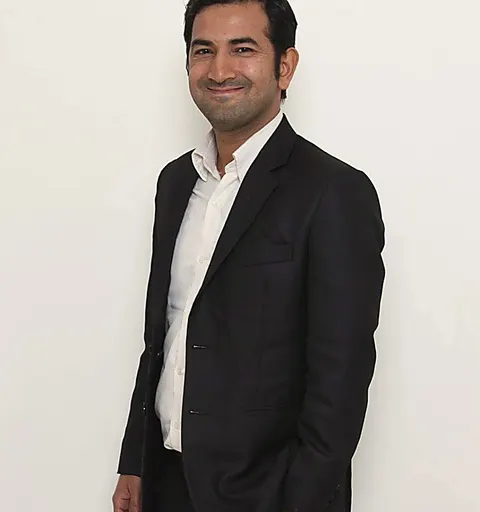 Keshab Chapagain · MARN 1576536 · Registered since 2015
 - Visa
- Subclass 500
- Living cost req. (at last review)
- $29,710 / year
- Work limit
- 48 hrs / fortnight
- Key test
- Genuine Student
- Nursing English
- IELTS 7.0 / OET B
The migration agent that other migration agents learn from. WIDEN is an OMARA-approved CPD provider — our training is rated ★4.9 by 40+ registered migration agents.
About the CPD →MARN 1576536 · Verifiable at mara.gov.au
General information only. This page provides general information about Subclass 500 student visa applications and is written with context relevant to applicants from the Philippines. It does not constitute migration advice (s 23, Migration (Migration Agents Code of Conduct) Regulations 2021). Migration advice on your specific circumstances is provided only after a paid consultation (s 43) with a written service agreement (s 42).
The Subclass 500 student visa — overview
The Subclass 500 permits the holder to study a CRICOS-registered course in Australia, work up to 48 hours per fortnight during study periods (unlimited during holidays), and bring eligible family members. Visa duration is granted by reference to the course length plus a small buffer.
What Filipino students typically study in Australia
- Bachelor and Master of Nursing — ANMAC and AHPRA pathway, very strong post-study pathway given chronic Australian nursing shortages
- Certificate III/IV in Individual Support (Ageing) and Diploma of Nursing — aged care workforce, often combined with prior caregiving experience in the Philippines
- Master of Information Technology, Master of Data Science — ACS skills assessment
- Master of Professional Accounting — CPA Australia / CA ANZ / IPA accreditation
- Bachelor and Master of Engineering — Engineers Australia pathway
- Bachelor of Education (Primary or Secondary) — AITSL skills assessment for teachers
- Certificate IV in Commercial Cookery + Diploma of Hospitality Management
- Allied health programs (physiotherapy, occupational therapy, speech pathology) — respective skills authorities and AHPRA
English language — Filipino applicants
Philippine education is delivered in English, which simplifies the English component of the visa application. However, the Department generally requires a formal English test result — IELTS, PTE, OET, or TOEFL — even for applicants with English-medium qualifications. Common test choices and target scores:
- Bachelor / Master of Nursing or other regulated health profession — IELTS 7.0 with no band below 7.0, or OET grade B in each skill
- Master of IT, Master of Engineering, Master of Accounting — IELTS 6.5 overall (no band below 6.0), or PTE 58+
- VET-sector qualifications (Cert III/IV, Diploma) — IELTS 5.5 overall, or PTE 42+
Some applicants may qualify for an English test exemption based on a 5-year+ English-medium qualification from a recognised institution. This should be verified case-by-case.
Genuine Student considerations for Filipino applicants
- Course-to-career link. A defensible connection between prior study and the chosen Australian course. Filipino healthcare professionals choosing an Australian nursing program have a strong narrative; a sudden shift between fields needs a careful explanation.
- Why Australia. Reasons relating to the course, the institution, the post-study pathway, or specific industry strengths in Australia.
- Family ties. The Filipino community in Australia is significant. Relatives already in Australia should be disclosed in the Genuine Student statement, with the applicant's own reasons for study presented honestly.
- Financial documentation. OFW (Overseas Filipino Worker) remittance support is common and accepted when documented properly. Recently-deposited large sums without documented source are flagged.
- Immigration history. Prior visa applications to Australia, Canada, the US, the UK, or elsewhere — disclosed truthfully. Prior refusals should be addressed directly.
See our Genuine Student Requirement guide for the full framework.
Financial requirement — typical sources for Filipino applicants
- Family savings in BPI, BDO, Metrobank, Land Bank, or other licensed Philippine banks held for 3–6 months
- OFW remittance arrangements documented through bank-issued remittance histories
- Education loans from Philippine banks or government education-financing schemes
- Sponsorship by employed family members (including OFWs) with source-of-funds evidence — payslips, employment letters, residency documents from the host country
- Property-backed loans where supported by bank documentation
Funds shown should reflect genuine access — recently-deposited large amounts from unclear sources are scrutinised. Financial documents are independently verified; false documents trigger PIC 4020 and a 3-year exclusion.
Special pathway: healthcare from the Philippines
The Philippines is one of Australia's largest source countries for skilled healthcare workers. A common multi-step pathway:
- Filipino RN with Philippine qualifications and registration → Subclass 500 student visa to undertake an Australian Bachelor or Master of Nursing (or a bridging program for internationally-qualified nurses)
- During studies: ANMAC skills assessment + AHPRA registration via the Nursing and Midwifery Board of Australia
- On completion: Subclass 485 graduate visa, then Subclass 482 sponsorship by an Australian healthcare employer, then Subclass 186 PR
For experienced Filipino nurses, the pathway may also start with employer sponsorship directly via the Subclass 482 (Specialist or Core Skills depending on salary). See our healthcare sponsorship guide for the employer-facing process.
Discuss your situation
A 30-minute consultation will review your specific course choice, prior qualifications, financial profile, immigration history, and the Genuine Student framing for your application. Initial consultations in English.
General information only. This page provides general information about Subclass 500 student visa applications with context relevant to applicants from the Philippines. Australia does not formally apply country-of-passport assessment levels; all applications are assessed individually under the Genuine Student framework. This page does not constitute migration advice (s 23). Migration advice is provided by Keshab Chapagain (MARN 1576536) only after a paid initial consultation under section 43 of the Migration (Migration Agents Code of Conduct) Regulations 2021, with a written service agreement issued before further work commences (section 42). The OMARA Consumer Guide is provided to all clients before the consultation begins.
Outcomes cannot be guaranteed by any registered migration agent (s 15). PI insurance held under the Migration Agents Regulations 2026. Complaints via our Complaints Policy or directly to OMARA.
Not sure which visa fits you?
Answer three questions. An automated guide points you to the route that usually applies. General information only.
Questions we get asked first
What is the most common Australian student visa pathway for Filipino students?
Most Filipino students apply for the Subclass 500 student visa to study at an Australian CRICOS-registered institution. The most common course choices are in healthcare and aged care (Bachelor of Nursing, Certificate III/IV in Individual Support, Diploma of Nursing), allied health, hospitality, ICT, and accounting. Filipino students benefit from a generally strong English background relative to many other source countries (Philippines is an English-medium education system), which simplifies the English component of the application.
Do Filipino students need to take an English test?
Despite Filipino education being delivered in English, the Department of Home Affairs and AHPRA (for regulated health professions) typically require a formal English test result — IELTS, PTE, OET, or TOEFL — for the visa and for any subsequent professional registration. Some applicants from the Philippines do qualify for an English test exemption based on a 5-year+ English-medium qualification, but this should be verified case-by-case. Common results for Filipino applicants: IELTS 6.5–7.5 overall, PTE 58+, or OET grade B for healthcare.
What financial evidence works for Filipino student visa applications?
The Department requires evidence of genuine access to funds covering 12 months tuition, 12 months living costs (published rate AUD $29,710 at last review — the Department updates this periodically, so verify the current figure), return travel, and dependent school fees where applicable. For Filipino applicants, common sources include: family savings in BPI, BDO, Metrobank, Land Bank, or other licensed Philippine banks (held 3–6 months with documented source); remittance savings from family members working overseas (OFW arrangements are common and documented properly are widely accepted); education loans from Philippine banks or government-backed loan schemes; and sponsorship by employed family members with source-of-funds evidence.
How does the Genuine Student framework apply to Filipino applicants?
The Genuine Student framework applies the same criteria to applicants from every country — current circumstances, course choice in relation to career, immigration history, and other relevant matters. For Filipino applicants, recurring areas of attention include: the link between prior study and chosen course in Australia; the practical career plan post-graduation; financial documentation that withstands scrutiny; and family/community ties in Australia (which should be disclosed honestly, not concealed). Each application is assessed individually.
What courses do Filipino students commonly study in Australia?
Common pathways: Bachelor of Nursing and Master of Nursing (ANMAC and AHPRA pathway, strong PR alignment); Certificate III/IV in Individual Support (Ageing) and Diploma of Nursing (aged care workforce, often combined with prior caregiving experience); Master of Information Technology and specialisations (ACS skills assessment); Master of Professional Accounting (CPA accreditation); Bachelor and Master of Engineering; Bachelor of Education (Primary or Secondary); Certificate IV in Commercial Cookery + Diploma of Hospitality Management. Filipino healthcare professionals often pursue Australian qualifications and AHPRA registration in parallel.
What about Filipino nurses with overseas registration?
Registered Nurses already qualified and registered in the Philippines need to satisfy three Australian requirements before practising as RNs in Australia: a positive skills assessment from ANMAC, AHPRA registration through the Nursing and Midwifery Board, and the visa pathway (student, graduate, or directly via 482/186 sponsorship). The English requirement is typically IELTS 7.0 with no band below 7.0, or OET grade B. The skills assessment process can include a competency assessment program if Australian-equivalent training is not deemed sufficient on paperwork alone. See our healthcare sponsorship guide for the employer-side pathway.
What's the typical post-study pathway from a Filipino student visa?
A common pathway: Subclass 500 (student) → Subclass 485 (graduate visa, 2–3 years post-study work) → either Subclass 482 sponsorship by an Australian employer → Subclass 186 PR, OR Subclass 189/190/491 skilled migration with a positive skills assessment. Filipino students entering nursing or aged care often progress through employer sponsorship; those in ICT or accounting more often through points-tested skilled migration. Outcomes depend on individual circumstances and the occupation lists in force at each step — no pathway is guaranteed.
Can I bring my family to Australia on a student visa?
The rules changed on 2 October 2026, and the change is significant. For Student visa applications lodged from that date, most applicants can no longer include a spouse/de facto partner or children at all — family inclusion is limited to PhD students, DFAT/Defence-sponsored students, foreign-government scholarship recipients, and eligible students from Pacific or ASEAN countries (the Philippines is an ASEAN member, so check the eligibility settings carefully — this exemption may matter for Filipino applicants). Just as importantly, the old strategy of applying alone and bringing family later as 'subsequent entrants' has ended entirely, with no exemptions: family cannot be added after the visa is granted. Where family inclusion is available, everyone must be in the application from the start and in the same location at lodgement, and each family member adds visa charges and financial requirements. Applications lodged before 2 October 2026 are assessed under the old rules. See our full guide to the 2 October 2026 student visa changes.
Keep reading