Family · Parent visas 103 · 143 · 864 · 870
Parent Visa Australia — 2026 Guide
Short answer: there are two families of parent visa. Contributory (143 onshore-or-offshore, 864 aged onshore; 173/884 temporary steps) cost A$4,040 now plus a second instalment of A$43,600 per parent before grant, and Home Affairs currently reports roughly 12–14 years. Non-contributory (103, 804) cost far less but are queued for about 30 years. The temporary Sponsored Parent visa (870) gives 3–5 years, up to 10, with no PR. Every one needs the Balance of Family test and most need an Assurance of Support (bond A$10,000 single / A$14,000 couple at last review). Which fits which family, and what to lodge, below.
By Keshab Chapagain, registered migration agent (MARN 1576536) since 2015 · WIDEN, Sydney · Reviewed August 2026
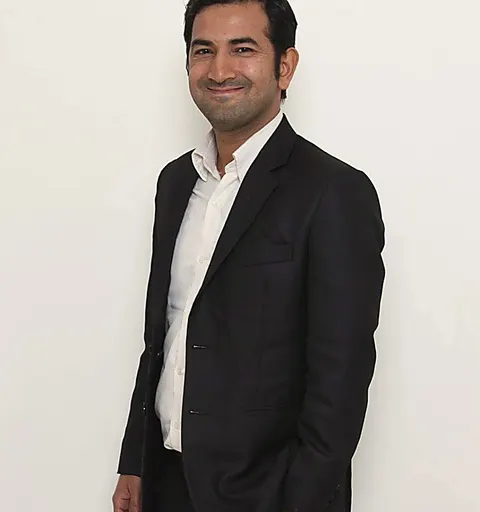 Keshab Chapagain · MARN 1576536 · Registered since 2015
 - 143 2nd instalment (checked Aug 2026)
- $43,600
- 143 wait time
- ~12–14 years
- 103 wait time
- ~30 years
- 870 stay
- 3–5 years (max 10)
- AoS bond (at last review)
- $10,000–$14,000
- Key test
- Balance of Family
The migration agent that other migration agents learn from. WIDEN is an OMARA-approved CPD provider — our training is rated ★4.9 by 40+ registered migration agents.
About the CPD →MARN 1576536 · Verifiable at mara.gov.au
The wait times are extreme. Non-contributory parent visas (103, 804) currently take approximately 30 years to process — for many applicants this exceeds their practical lifetime. Contributory parent visas (143, 864) take approximately 12–14 years. These are a fundamental feature of the Australian parent visa programme; any agent claiming faster timing should be treated with caution. This page is general information only (s 23, Migration (Migration Agents Code of Conduct) Regulations 2021).
The big decision: contributory vs non-contributory
Australia's parent visa programme has two parallel streams that differ on a single fundamental dimension: how much you pay the government, and consequently how fast the application is processed.
Contributory parent visas (143, 173, 864, 884) require a second visa application charge of AUD $43,600 per primary applicant (Home Affairs amount, checked August 2026). In exchange, processing time is meaningfully faster — typically 12–14 years for the 143 versus around 30 years (capped) for the 103. The second VAC is the largest single government fee for any Australian visa, and it has to be paid before grant.
Non-contributory parent visas (103, 804) have a much lower visa application charge (around AUD $5,000–$6,000 total). The catch is that processing time exceeds the practical lifetime of many applicants — the queue is capped, and demand exceeds capacity. For a 60-year-old applicant, a 103 application is unlikely to result in a visa during their lifetime; for a 75-year-old, the prospect is near-zero. The non-contributory subclasses are still occasionally lodged where (a) the applicant has a strong reason to maintain a place in the queue, (b) the family hopes processing times will improve, or (c) the applicant cannot fund the contributory pathway and wants to keep an option open.
For most families, the practical question becomes: can we fund the contributory pathway? If yes, the 143 (or 864 for aged parents) is the typical choice. If no, the 870 Sponsored Parent Temporary visa is the most practical alternative for actually getting the parent to Australia within a useful timeframe.
The contributory-vs-waiting decision is the whole game — and it turns on your parents’ ages, funds and the Balance of Family test. Describe the family below and get a straight written answer on which route fits.
Ask about your parents →The subclasses explained
Subclass 143 — Contributory Parent visa (Permanent)
Permanent residence at grant. Applicant can be inside or outside Australia at decision time (note the lodgement-vs-grant location requirements). Indicative cost: first instalment AUD $4,040 (from 1 July 2026), second instalment of AUD $43,600 per primary applicant (plus additional for a spouse). Processing time: approximately 12–14 years. Balance of Family test applies. Assurance of Support required. This is the most common contributory parent visa for working-age parents.
Subclass 173 — Contributory Parent (Temporary)
A two-year temporary visa that can be used as a stepping stone to the 143. Indicative cost: first instalment around AUD $5,000, second instalment around AUD $30,000 per primary applicant. The 173 holder can then apply for the 143 with a reduced second-instalment fee (because they already paid most of the contribution at the 173 stage). Processing time: faster than the 143 but still measured in years. Useful for families who want to start the process and have the parent transition gradually.
Subclass 864 — Contributory Aged Parent (Permanent)
For parents who have reached age 'qualifying for an Australian aged pension' (currently 67). Substantively similar to the 143, with the additional requirement that the parent is aged 67 or older. Costs and timing are similar to the 143. The 864 is lodged onshore (within Australia) and requires the applicant to be in Australia at decision time. Aged parents who can travel and stay in Australia during processing often use this subclass.
Subclass 884 — Contributory Aged Parent (Temporary)
The temporary stepping-stone to the 864, mirroring the 173/143 relationship. Two-year temporary visa, reduced second instalment when transitioning to the 864. Indicative cost: first instalment ~$5,000, second ~$30,000.
Subclass 103 — Parent visa (non-contributory, permanent)
The non-contributory equivalent of the 143. Indicative cost: around AUD $5,000 total (significantly less than the contributory pathway). Processing time: approximately 30 years; the practical wait can exceed the applicant's lifetime. Useful only as a place-holding option for applicants who cannot fund the contributory pathway and want to maintain a queue position.
Subclass 804 — Aged Parent visa (non-contributory, permanent, onshore)
The non-contributory onshore equivalent of the 864. For parents aged 67+ already in Australia. Same wait-time issue as the 103. The onshore lodgement requirement makes it useful for parents already on a visitor visa or other temporary status who want to lodge and hold a bridging visa during the (very long) wait.
Subclass 870 — Sponsored Parent (Temporary)
A long-stay temporary visa — 3 or 5 years per grant, with a maximum of 10 years total over multiple grants. This is not a pathway to permanent residence. The 870 is useful for families who want extended time with their parents in Australia without committing to (or being unable to fund) the contributory parent permanent visa. The sponsoring child must first be approved as a Sponsored Parent Sponsor (separate prior process), must meet income thresholds (around AUD $115,000+ at last review, depending on circumstances), and mandatory health insurance applies for the parent throughout the visa.
The Balance of Family test
Every parent visa subclass (except the 870) requires the applicant to satisfy the Balance of Family test:
At least half of the applicant's children must be Australian permanent residents or citizens, OR more of the applicant's children must live in Australia than in any other single country.
'Children' includes biological children, adopted children, step-children where there is an ongoing relationship, and children of any age. The test counts all children regardless of whether they live with the applicant. If a parent has six children and four are in Australia, the test is satisfied; if three are in Australia and three in India (with no other concentration), the test is satisfied. If two are in Australia and four are in the parent's home country, the test fails.
The Balance of Family test must be satisfied at the time the application is made and is reassessed at decision time. Failing the test results in refusal.
Assurance of Support and sponsor obligations
Most parent visa grants require an Assurance of Support (AoS) — a legal undertaking by an Australian resident (usually the sponsoring child) to financially support the parent if certain social security payments are claimed.
- AoS bond — paid to Centrelink, AUD $10,000 for a single parent or AUD $14,000 at last review — verify the current bond for a couple. Refundable after 10 years if no recoverable payments have been made.
- AoS income test — the assurer must meet a prescribed minimum income (varies; verify current rate). The income test is calculated over a recent period and includes household income calculations.
- AoS duration — typically 10 years from grant for parent visas.
- Sponsor eligibility — Australian citizen, PR, or eligible NZ citizen; 18+; usually resident in Australia; typically 2+ years lawful Australian residence.
For the 870 Sponsored Parent visa, additional sponsor-side requirements apply: a higher income threshold (around AUD $115,000 indicative at last review — verify the current rate), and the sponsor must be approved as a Sponsored Parent Sponsor before the parent's visa application can be lodged.
What WIDEN does for parent visa applications
- Initial review of which subclass fits the family situation — given the parent's age, the family's financial capacity, the Balance of Family situation, and the realistic time horizon
- Balance of Family assessment with documentary support (birth certificates, identity documents for each child, residence verification)
- Assurance of Support preparation — including income evidence, bond planning, and Centrelink interactions
- Lodgement of the visa application, including responding to Departmental requests through the (long) queue
- For 870 applications: Sponsored Parent Sponsor application + parent visa application together
- Where appropriate: visitor visa lodgements for the parent during the wait, including longer-stay multiple-entry options
- AAT review of any refused application
Fees are quoted in writing after an initial paid consultation under section 43 of the Migration (Migration Agents Code of Conduct) Regulations 2021, and confirmed in a written service agreement under section 42 before work commences. Government charges are separate.
Discuss your parent visa situation
A 30-minute consultation will review which subclass fits your family, whether the Balance of Family test is satisfied, the practical wait-time implications, and the Assurance of Support implications for the sponsor. Consultations are conducted personally by Keshab Chapagain (MARN 1576536).
General information only. This page describes the typical parent visa landscape. It does not constitute migration advice (s 23). Government charges, AoS bond amounts, income thresholds, and processing times change — verify current figures at immi.homeaffairs.gov.au before relying on the figures stated.
Migration advice on parent visas is provided by Keshab Chapagain (MARN 1576536) only after a paid initial consultation under section 43 of the Migration (Migration Agents Code of Conduct) Regulations 2021, with a written service agreement issued before further work commences (section 42). The OMARA Consumer Guide is provided to all clients before the consultation begins.
Outcomes cannot be guaranteed by any registered migration agent (s 15). Processing times stated are indicative based on currently published Department information and are subject to change with parent visa programme capacity and policy decisions. PI insurance held under the Migration Agents Regulations 2026. Complaints via our Complaints Policy or directly to OMARA.
Which parent visa actually applies to you?
The 103, 143, 173, 804, 864 and 884 are not variations on one visa — they differ on cost, on whether you can wait in Australia, and on how long the queue runs. Which one is open to you turns on your age, where you are now, and the Balance of Family test.
How this works: we read every enquiry and reply personally. Advice on your own case is given in a consultation — $220 inc. GST, credited in full if you engage us.
Ready now? Skip the form. Pick a time and talk to Keshab directly — your documents on the table, a straight answer, and a written summary afterwards. $220 inc. GST, credited toward your fee if you engage.
Pick a time — no enquiry needed →Not sure which visa fits you?
Answer three questions. An automated guide points you to the route that usually applies. General information only.
Questions we get asked first
What's the difference between a contributory and a non-contributory parent visa?
Contributory parent visas (Subclass 143, 173, 864, 884) require a second visa application charge of approximately AUD $50,000 per applicant (the 'contribution'). In exchange, processing time is significantly faster — typically 12–14 years for the 143 versus around 30 years (capped) for the 103. Non-contributory parent visas (Subclass 103, 804) have a much lower visa application charge (typically AUD $5,000–$6,000) but processing time exceeds the practical lifetime of most applicants. The choice usually comes down to whether the family can fund the contributory fee — for many families the contributory pathway is the only realistic option.
How much does a parent visa actually cost in Australia in 2026?
Government charges vary materially by subclass. Indicative figures (verify on homeaffairs.gov.au): Subclass 143 (Contributory Parent) — first instalment AUD $4,040 (from 1 July 2026) plus second instalment of AUD $43,600 per primary applicant, plus additional charges for an accompanying spouse. Subclass 173 (Contributory Parent temporary) — around AUD $5,000 plus AUD $30,000. Subclass 103 (Parent) — around AUD $5,000 plus a smaller second instalment. Subclass 870 (Sponsored Parent Temporary) — around AUD $5,000 (no second instalment, but it's a temporary visa with no PR). Professional fees are separate.
What is the Balance of Family test?
The Balance of Family test requires that at least half of the applicant's children are Australian permanent residents or citizens, OR that more of the applicant's children live in Australia than in any other single country. 'Children' includes both biological and adopted children. The test counts all children regardless of age or whether they live with the applicant. The Balance of Family test must be satisfied at the time the parent visa application is made, and is reassessed at decision time. If the test is not satisfied, the application will be refused.
What is the Assurance of Support and why does it matter?
An Assurance of Support (AoS) is a legal undertaking by an Australian resident — usually the sponsoring child — to financially support the parent if the parent claims certain social security payments. Parent visa grants typically require an AoS in place before grant. The AoS includes a bond paid to Centrelink (AUD $10,000 for a single parent or AUD $14,000 for a couple, refundable after 10 years), plus the income requirements the assurer must meet to be accepted. The 870 Sponsored Parent visa also requires an income test on the sponsor (around AUD $115,000+ at last review, depending on circumstances).
What is the 870 Sponsored Parent (Temporary) visa?
The 870 is a long-stay temporary visa for parents — 3 or 5 years per grant, with a maximum 10 years total over multiple grants. It is not a pathway to permanent residence. The sponsor must be approved as a Sponsored Parent Sponsor (a separate, prior process) and must meet income thresholds. The 870 is useful for families who want their parents to spend extended time in Australia without committing to (or being unable to fund) the contributory parent permanent visa. Health insurance is mandatory throughout.
How long are the wait times for parent visas in 2026?
Indicative current waits (verify at homeaffairs.gov.au): Subclass 143 (Contributory Parent) — approximately 12–14 years. Subclass 103 (non-contributory Parent) — approximately 30 years; due to capped places and queued applications, the practical wait can exceed the applicant's lifetime. Subclass 173 and 884 (Contributory Temporary) — somewhat faster, around 5–8 years. Subclass 870 (Sponsored Parent Temporary) — typically 6–12 months. The wait times are a fundamental feature of the Australian parent visa programme and should be factored into the decision before applying.
Can a parent visit Australia while waiting for their permanent visa to be processed?
Yes, but through separate visas. A parent waiting for a 143/864/103 to be processed can apply for Subclass 600 visitor visas (typically up to 12 months per visit, longer-stay options up to 5 years per grant in some cases), or the Subclass 870 Sponsored Parent Temporary visa (3 or 5 years per grant). These visitor and temporary visas do not affect the queued permanent application. Many families use a combination — temporary visa for time together while the permanent visa progresses through the queue.
Who can sponsor a parent for an Australian parent visa?
The sponsor must be (a) an Australian citizen, Australian permanent resident, or eligible New Zealand citizen, (b) aged 18 or over, (c) usually resident in Australia, and (d) typically must have been lawfully resident in Australia for at least 2 years. The sponsor is responsible for providing the Assurance of Support and any associated bond. For the 870 Sponsored Parent Temporary visa, additional income test requirements apply to the sponsor. A parent can be sponsored by their child, an eligible relative's child, or in some cases a registered community organisation.
Can WIDEN guarantee my parent visa will be approved?
No. Section 15 of the Migration (Migration Agents Code of Conduct) Regulations 2021 prohibits any registered migration agent from guaranteeing visa outcomes. What WIDEN can do is assess whether the parent meets the Balance of Family test, advise on the choice between contributory and non-contributory pathways given the family's specific circumstances and timeline, prepare the AoS documentation, and lodge the application correctly. Outcomes depend on Department of Home Affairs assessment and the operation of the parent visa programme caps and queues.
Keep reading