Free resource — for employers
482 Sponsorship Step-by-Step Guide
Sponsoring a worker on the Subclass 482 Skills in Demand visa involves three Department of Home Affairs applications. This guide walks each step at the framework level — what the Department typically wants, what trips first-time sponsors up, and what the realistic timeline looks like.
By Keshab Chapagain, registered migration agent (MARN 1576536) since 2015 · WIDEN, Sydney · Reviewed August 2026
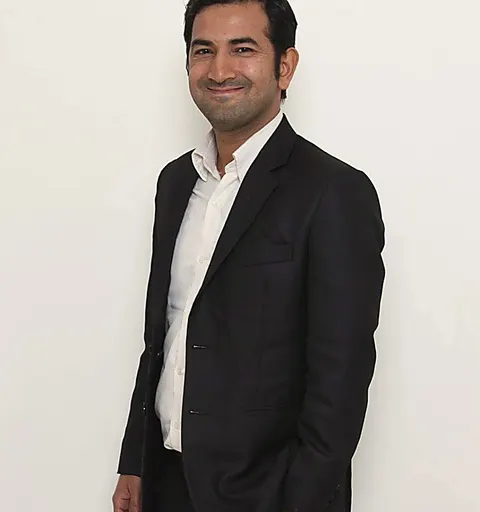 Keshab Chapagain · MARN 1576536 · Registered since 2015
 - CSIT 2026–27 (from 1 Jul 2026)
- $79,423
- CSIT 2025–26 (to 30 Jun 2026)
- $76,515
- SBS validity
- 5 years
- End-to-end timeline
- 4–9 months
The migration agent that other migration agents learn from. WIDEN is an OMARA-approved CPD provider — our training is rated ★4.9 by 40+ registered migration agents.
About the CPD →MARN 1576536 · Print this page
Three Department applications. SBS (sponsorship), nomination (the position), visa (the worker). Most first-time 482 errors are concentrated in the nomination step — particularly AMSR evidence and the "genuine position" requirement.
Step 1 — Standard Business Sponsorship (SBS) approval
Lodged once, valid 5 years, covers all your future nominations during that period.
Department typically wants evidence of:
- Lawfully operating Australian business — ASIC company extract, ABN registration, business name registration
- Active and ongoing operations — financial statements (often 12+ months), bank statements, business activity statements (BAS)
- No adverse information — non-compliance history, prior breaches
- Compliance with workplace laws and Department migration laws
- Commitment to train Australians — historically met via the SAF levy at nomination stage
Common SBS issues: sole-trader or trust structures without clear evidence of trading activity; new businesses (less than 12 months) without sufficient operational history; previous compliance issues not transparently disclosed.
Step 2 — Nomination (the position)
Lodged for each position you want to fill via the 482 visa. This is where most refusals happen.
Key requirements (general framework):
- Occupation on the relevant list — the nominated occupation must be on the Department's current list for the relevant stream
- Annual Market Salary Rate (AMSR) — pay rate at or above the market rate for the position in that location, evidenced with comparator data the Department accepts
- Core Skills Income Threshold (CSIT) — salary at or above the CSIT (AUD $76,515 to 30 June 2026, rising to $79,423 from 1 July 2026), which replaced the former TSMIT, or the Specialist Skills Income Threshold for that stream
- SAF levy — paid in full at lodgement (scales by business turnover and visa stream/duration; typically several thousand AUD per nomination per year)
- Genuine position — evidence the role is real, necessary in the business, and aligned with the business's actual operations
- ANZSCO match — actual duties match the ANZSCO description of the nominated occupation, which must be on the Core Skills Occupation List for the Core Skills stream
- Equivalent terms and conditions — no less favourable than for equivalent Australian workers
Step 3 — Visa application (the worker)
Lodged by the worker once SBS and nomination are approved (or in parallel where strategy allows).
Worker must meet:
- Skills assessment (where required for the occupation)
- Work experience requirement (1 year of relevant experience within the last 5 years, under Skills in Demand)
- English language at the stream-specific level
- Health and character requirements
- Identity and documentation
Sponsor obligations after grant
- Provide the position as described — same role, duties, terms, location
- Maintain records — employment, training, complaints handling, return-of-employee reporting
- Notify Department of certain events — change of business structure, change in worker's role, worker ceasing employment
- Cooperate with Department monitoring (site visits, document requests)
- Pay no less than equivalent terms and conditions for the duration of the visa
Migration Regulation 2.87 — cost recovery prohibited
Migration Regulation 2.87 prohibits sponsors from recovering sponsorship costs from the worker. The SAF levy, nomination fee, and other sponsor-side costs are the sponsor's, not the worker's. Recovering these costs from the worker — including by salary deduction, "loan" arrangements, or post-grant repayment — is a serious compliance breach with significant penalties. Visa application charges paid by the worker can lawfully be the worker's responsibility, but sponsorship costs cannot.
Realistic timeline (first-time sponsor)
- SBS preparation + lodgement + decision: several weeks to a few months
- Nomination preparation + lodgement + decision: typically several weeks (faster with priority where available)
- Visa application: depends on stream, occupation, applicant location
- From first conversation to visa grant: many sponsorships take 4–9 months end-to-end
Established sponsors with their first SBS already in place can typically run a nomination + visa application in materially less time.
Next steps
- Sponsor a Worker (482 / 186) — full service overview
- Sponsorship cost calculator
- 482 nomination refusal — if already refused
- Book a paid 30-min consultation
General information only. This guide is general information about the 482 sponsorship framework for employers. It does not constitute migration advice (s 23, Migration (Migration Agents Code of Conduct) Regulations 2021). Outcomes cannot be guaranteed by any registered migration agent (s 15). Migration advice is provided by Keshab Chapagain (MARN 1576536) only after a paid initial consultation under section 43 of the Code, with a written service agreement issued before further work commences (section 42). OMARA Consumer Guide provided to all clients before consultation. PI insurance held under the Migration Agents Regulations 2026. Complaints via our Complaints Policy or directly to OMARA.
Sponsoring a worker — or being sponsored?
Tell us your situation and what you need.
How this works: we read every enquiry and reply personally. Advice on your own case is given in a consultation — $220 inc. GST, credited in full if you engage us.
Ready now? Skip the form. Pick a time and talk to Keshab directly — your documents on the table, a straight answer, and a written summary afterwards. $220 inc. GST, credited toward your fee if you engage.
Pick a time — no enquiry needed →Not sure which visa fits you?
Answer three questions. An automated guide points you to the route that usually applies. General information only.
Questions we get asked first
How long does it take to become an approved 482 sponsor?
Standard Business Sponsorship (SBS) preparation, lodgement, and Department decision typically takes several weeks to a few months for a first-time sponsor. End-to-end from first conversation through SBS, nomination, and visa grant, many 482 sponsorships take 4–9 months. Established sponsors with an existing SBS can move materially faster on the nomination and visa application stages.
What does it cost to sponsor a 482 worker?
Costs include the SBS application charge, the nomination application charge, the Skilling Australians Fund (SAF) levy paid in full at nomination, the visa application charge (paid by the worker), plus internal costs like salary at or above the Annual Market Salary Rate and the CSIT (A$79,423 from 1 July 2026). SAF levies scale by business turnover and visa stream/duration. Migration Regulation 2.87 prohibits the sponsor from recovering sponsorship costs from the worker — they must be borne by the business. Verify current fees at homeaffairs.gov.au.
Can a small business sponsor a 482 worker?
Yes. There is no business-size threshold for Standard Business Sponsorship. A small business needs to demonstrate it is lawfully operating, actively trading, financially viable, compliant with workplace and migration laws, and has a genuine position for the role. Small businesses typically need stronger evidence of trading history and financial capacity than larger sponsors. The SAF levy is lower for businesses with annual turnover under $10 million.
What is the difference between SBS, nomination, and visa?
SBS (Standard Business Sponsorship) is the business's approval to sponsor any 482 worker — lodged once, valid 5 years. The nomination is lodged for each specific position you want to fill — the Department assesses whether the role is genuine, on the relevant occupation list, and meets salary and condition requirements. The visa application is lodged by the individual worker once SBS and nomination are in place. Each is a separate Department application with its own fee.
What is the Annual Market Salary Rate (AMSR)?
The AMSR is the salary an Australian worker would be paid for the same position in the same location. The 482 nomination must pay the worker at or above the AMSR. Sponsors evidence the AMSR with comparator data the Department accepts — typically wage agreements, EBAs, advertised salaries, or independent benchmarking — alongside the TSMIT (Temporary Skilled Migration Income Threshold) which acts as a floor. Setting the AMSR incorrectly is one of the most common nomination refusal grounds.
Can I recover sponsorship costs from the 482 worker?
No. Migration Regulation 2.87 prohibits the sponsor from recovering sponsorship costs from the worker. This includes the SAF levy, the nomination application fee, and other costs that are the sponsor's responsibility. Recovery in any form — direct charge, salary deduction, "loan" arrangements, or post-grant repayment — is a serious compliance breach with significant penalties. The visa application charge paid by the worker can lawfully remain the worker's responsibility.
Keep reading